Guide · Winter roofing
Ice dams on Levittown Cape Cods: why they happen and how to stop them
Finished Cape attics, cold eaves and Long Island winters are a recipe for ice dams. Here is what causes them and what actually fixes them.
Talk to a roofing specialist about your Levittown home.
(516) 860-5291Phone line open 24/7 · Fast service for active leaksCall now to speak to a specialistIf icicles hang from your gutters every winter and a stain appears at the top of an upstairs wall during the thaw, you are probably dealing with ice dams. They are especially common on Levittown Cape Cods with finished upstairs rooms. Here is why, and what actually fixes them.
What an ice dam is
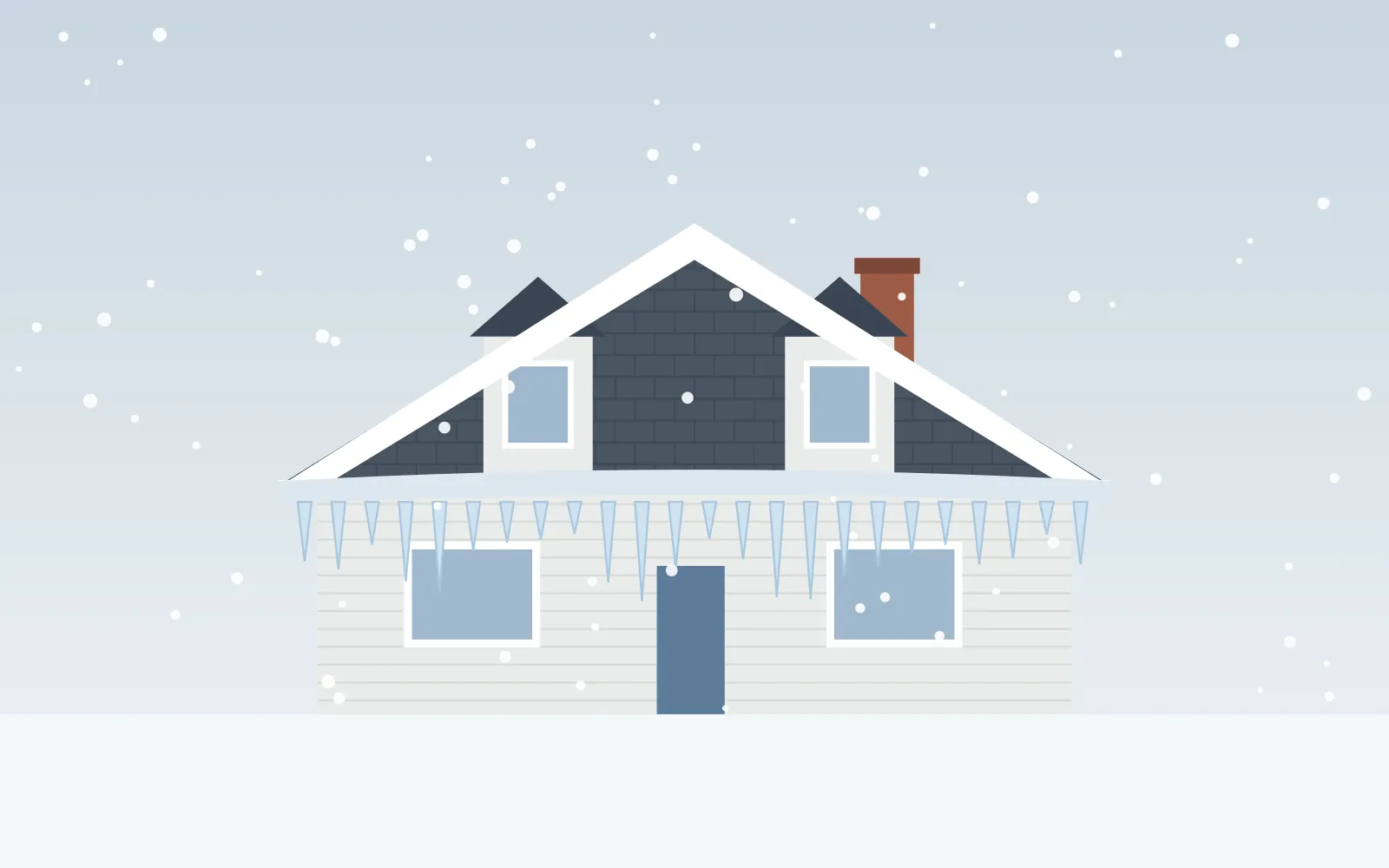
An ice dam is a ridge of ice that forms along the lower edge of a roof. Heat escaping from the house warms the roof deck and melts the snow on top. That meltwater runs down until it reaches the overhang, which sits outside the heated walls and stays below freezing. There it refreezes. Over days, the ice builds up and the water behind it has nowhere to go but sideways and up, under the shingles and into the house.
Why Levittown Capes get them so often
The original Levitt Capes had a steep roof over an unfinished attic. Most were later finished into bedrooms. That leaves the sloped ceilings of those rooms right up against the underside of the roof, with only a thin space for insulation and very little room for air to flow from the soffits to the ridge. Heat leaks straight into the roof deck. Knee-wall closets and recessed lights add more weak spots. The result is a warm roof with cold eaves, which is exactly the recipe for ice dams.
Signs you have an ice dam problem
- Thick icicles along the gutters, especially over heated rooms
- A band of ice on the lower few feet of the roof
- Stains or peeling paint at the top of exterior walls after snow
- Water dripping inside during a thaw, not during rain
- Snow melting on the upper roof while the lower roof stays snowy and icy
What to do during an ice dam leak
- Catch the water inside and move belongings away.
- Do not chip or hammer at the ice. It is easy to break shingles and gutters, and it is dangerous on a ladder.
- From the ground, a roof rake with a long handle can pull fresh snow off the lower roof to reduce meltwater. Avoid scraping down to the shingles.
- For an active leak, call for help. Roofers can steam ice dams off safely, which is far gentler than chipping.
Ice dam leaking into a bedroom?Call now to speak to a specialist. The phone line is open 24/7 through winter storms.
Call now to speak to a specialistThe long-term fix
Heat cables and salt pucks treat the symptom. The cure is to stop heat reaching the roof and to keep the roof deck cold:
- Air seal the attic floor and knee walls. Gaps around lights, pipes, chimneys and attic hatches let warm, moist air into the roof space.
- Add insulation where space allows, especially behind knee walls and in the small flat attic above the ceiling.
- Ventilate from soffit to ridge. Clear soffit vents and a continuous ridge vent let cold air sweep the underside of the deck. In tight Cape rafters, baffles keep a channel open above the insulation.
- Install ice and water barrier at replacement. A self-adhering membrane at the eaves seals around nails, so water backing up under the shingles cannot get through. It is standard practice in our climate and required by code in many parts of New York.
Is it worth doing now or at replacement time?
Air sealing and insulation can be improved any time, and they cut heating bills as well as ice dams. Ice barrier and ridge venting are best done when the roof is replaced. If your roof is getting older and you have ice dams every year, plan both together. See roof replacement and roof leak repair for more.
Frequently asked questions
Do heat cables stop ice dams?
Heat cables can keep channels open for meltwater, but they treat the symptom. Air sealing, insulation and ventilation address the cause.
Does homeowners insurance cover ice dam damage?
Many policies cover interior water damage from ice dams but not the cost of fixing the underlying insulation or ventilation. Check your policy wording.
Related roofing services in Levittown
Roof Leak Repair
Trace the real entry point — flashing, nail pops, vent boots or a tired dormer — and seal it properly.
See roof leak repair
Roof Replacement
Full tear-off and new roof for Levitt Capes and ranches: decking, ice barrier, ventilation, flashing and shingles.
See roof replacement
Emergency Roof Repair
24/7 phone line for active leaks, storm openings and fallen-limb damage. Tarping first, permanent fix after.
See emergency roof repair
Roof Inspection
A full condition check: shingles, flashing, attic, ventilation and remaining life, with photos and a written summary.
See roof inspection