Levittown, NY · Chimneys, dormers, vents and walls
Chimney and roof flashing repair in Levittown
Flashing is the thin metal and membrane that seals every joint where the roof meets a chimney, wall, dormer or pipe. On Levittown homes, with their added dormers and old chimneys, failed flashing is the most common cause of roof leaks.
- Chimney flashing and crickets
- Dormer step flashing
- Plumbing vent boots
Leak by the chimney or a dormer wall? Speak to a specialist.
(516) 860-5291Phone line open 24/7 · Fast service for active leaksCall now to speak to a specialistRoof flashing repair is often the difference between a roof that leaks every heavy rain and one that is watertight for years. Shingles shed water across the open roof. Flashing handles the hard parts: the vertical sides of chimneys and dormers, valleys, roof-to-wall joints and every pipe that pokes through.
What flashing does, in plain terms
Water runs downhill. Flashing is shaped so that at every joint, water is guided over the top of the layer below it, never behind it. Think of it like overlapping shingles on a wall: each piece laps over the one below. When flashing is missing, rusted, bent, or replaced with a smear of roofing tar, water gets behind it and into the house.
Types of flashing on a typical Levittown roof
| Flashing | Where it is | How it fails |
|---|---|---|
| Step flashing | Along dormer side walls and the sides of chimneys, one L-shaped piece per shingle course | Missing pieces, rust, or one long piece used instead of steps |
| Counter-flashing | Set into chimney mortar joints, lapping over the step flashing | Mortar joints crack, counter-flashing pulls out |
| Apron (base) flashing | Across the bottom of a chimney or the front of a dormer | Lifted edges, nails exposed |
| Chimney cricket | A small peaked diversion behind wider chimneys | Missing on older roofs, so debris and water pile up |
| Valley flashing | Where two roof slopes meet | Worn through, or shingles cut badly |
| Drip edge | Metal at the eaves and rakes | Missing, letting water wick into fascia and deck edge |
| Vent pipe boot | Around plumbing vent pipes | Rubber collar cracks in the sun |
Chimney flashing repair
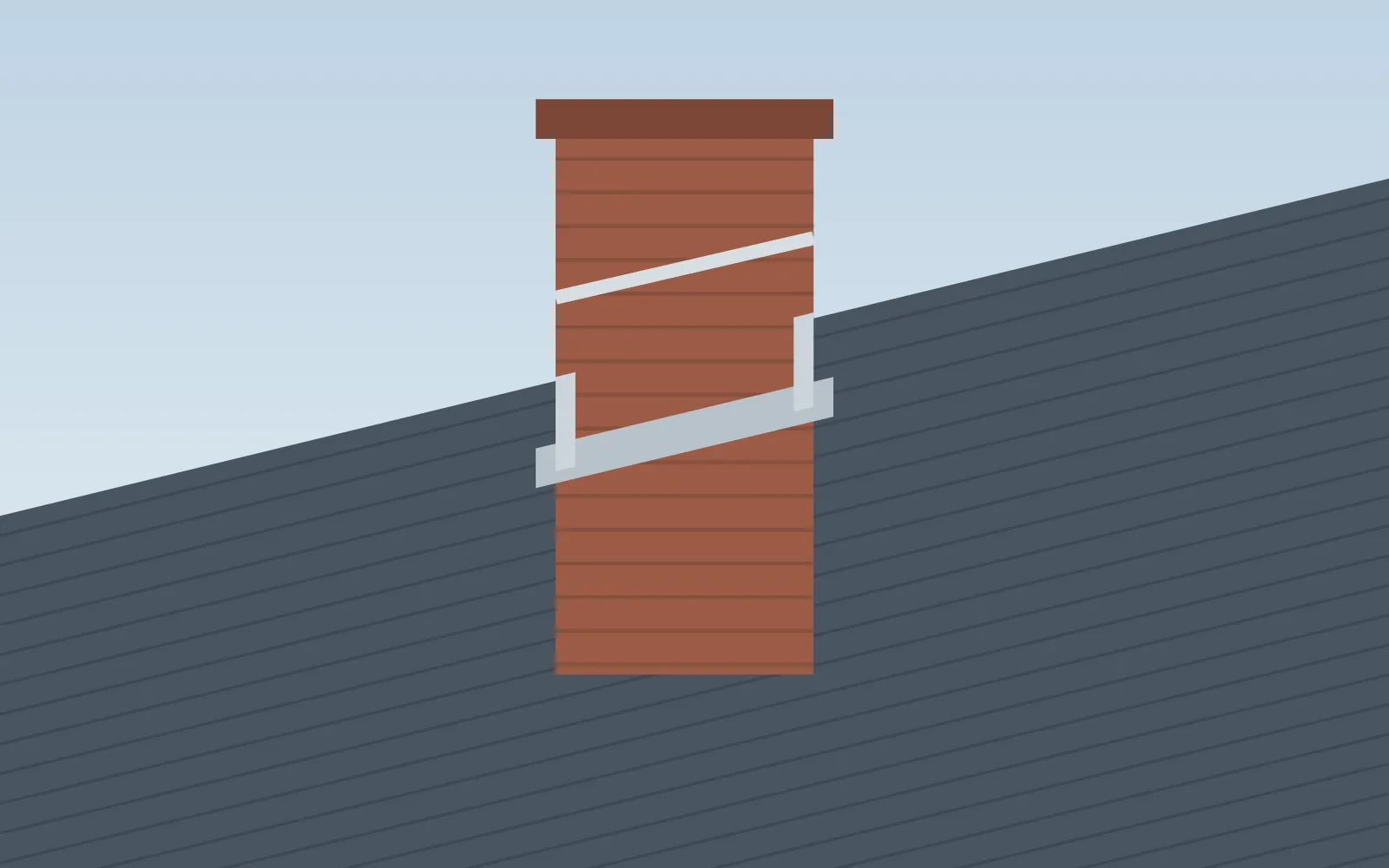
Many Levittown houses still have a masonry chimney that rises through the roof slope. Chimney leaks usually come from one of three things: failed flashing, cracked mortar joints or crown, or the brick itself absorbing water. A roofer handles the flashing; a mason may be needed for crown or brick repair.
A proper chimney flashing rebuild has these layers:
- An apron at the front of the chimney, lapping over the shingles below.
- Step flashing woven into each shingle course up both sides.
- Counter-flashing cut into the mortar joints and lapping down over the step flashing, so water running down the brick lands on the outside of the metal.
- A cricket on the uphill side if the chimney is wider than about 30 inches, so water and leaves flow around it rather than pooling.
A common shortcut to avoid: covering old flashing with roofing tar or caulk. It may stop a leak for a season, but it hardens and cracks with Long Island freeze-thaw cycles, and it makes the proper repair harder later.
Stain beside the chimney breast?Call now to speak to a specialist. Chimney leaks are one of the most common calls from Levittown homeowners.
Call now to speak to a specialistDormer and wall flashing
When a dormer was added to a Levittown Cape, its side walls became roof-to-wall joints that run the full height of the slope. Each needs step flashing tucked behind the siding. If the siding was later replaced or covered with vinyl, the flashing may have been bent, cut short or left out. Leaks here show up as stains at the top of the room below the dormer, along the knee wall, or inside closets. Repair means lifting the siding at the bottom edge, removing shingles along the wall, and installing new step flashing with the siding lapped over it.
Where a low-slope dormer roof meets the main roof or a wall, the fix overlaps with flat roof repair.
Plumbing vents, exhaust vents and other penetrations
Every pipe and vent cut through the roof needs its own flashing. Rubber vent boots are the weak spot: the rubber cracks after roughly 10 years in direct sun, and water runs down the pipe. Replacement boots with longer-lasting materials, or metal lead or copper boots, are available. Bathroom and kitchen exhaust vents, attic fans and satellite dish mounts are other frequent leak sources.
Flashing repair cost ranges
| Job | Estimated range |
|---|---|
| Plumbing vent boot replacement | $200 – $550 |
| Chimney counter-flashing reset or replacement | $450 – $1,200 |
| Full chimney flashing rebuild | $800 – $2,200 |
| Add a chimney cricket | $600 – $1,500 |
| Dormer wall step flashing, per side | $700 – $2,000 |
| Drip edge, per linear foot | $5 – $12 |
How a flashing repair runs
Flashing repairs take care and sequencing, because every piece laps over another.
- Locate the leak pathAttic and roof checks confirm whether the water comes from flashing, masonry or shingles nearby.
- Open the areaShingles around the joint are lifted or removed, and siding is released where step flashing needs to go behind it.
- Install new flashing in orderApron, step flashing, then counter-flashing cut into mortar, with a cricket where needed.
- Re-shingle and sealShingles are woven back in, and sealant is used only where the flashing design calls for it.
- Masonry referral if neededIf the crown or brick is the problem, you will be told so, rather than having flashing replaced that was not at fault.
Questions Levittown homeowners ask
How do I know if my chimney leak is the flashing or the brick?
Flashing leaks usually show during heavy or wind-driven rain and appear at the ceiling or wall next to the chimney. If the brick is damp inside the attic for days after rain, or the crown on top is cracked, the masonry may be absorbing water. A roofer can check both.
Can flashing be repaired without replacing the roof?
Yes. Flashing is often replaced on its own, with surrounding shingles removed and reinstalled or replaced. It is also the right time to do it if a roof replacement is coming up.
Is copper flashing worth it?
Copper costs more but lasts far longer than aluminum or galvanized steel, and is often used around chimneys. For most homes, properly installed aluminum or coated steel step flashing is adequate.
What is a chimney cricket and do I need one?
A cricket is a small peaked roof built behind the chimney to split water and leaves around it. It is commonly recommended for chimneys wider than about 30 inches.
Why is there tar all around my chimney?
Usually because an earlier leak was patched with roofing cement instead of new flashing. It is a sign the flashing should be inspected.
Related roofing services in Levittown
Roof Leak Repair
Trace the real entry point — flashing, nail pops, vent boots or a tired dormer — and seal it properly.
See roof leak repair
Skylight Leak Repair
Drips around skylights traced to flashing, seals or condensation, then reflashed, resealed or replaced.
See skylight leak repair
Flat Roof Repair
Leaking dormers, rear extensions and porch roofs: EPDM, modified bitumen and roll roofing repaired or recovered.
See flat roof repair
Roof Inspection
A full condition check: shingles, flashing, attic, ventilation and remaining life, with photos and a written summary.
See roof inspection